

In the relentless pursuit of love and a life unburdened by familial interference, one couple found themselves at a precipice, their burgeoning romance teetering on the edge of collapse. Faced with the suffocating embrace of parental oversight and the insidious creep of everyday pressures, they made a radical decision, a desperate gambit for salvation: to bare their souls to the unforgiving glare of the cameras and the keen scrutiny of the world. Their journey, fraught with unspoken anxieties and explosive confrontations, offers a raw and unvarnished look at the precarious nature of modern relationships and the lengths individuals will go to salvage what they hold dear.
The initial impetus for their immersion into the realm of reality television was disarmingly simple, yet profoundly revealing. “Get away from the parents,” was the blunt, almost desperate declaration, hinting at a suffocating domestic environment that stifled their individual growth and strained their connection. This desire for autonomy, for a sacred space where their relationship could flourish unhindered, set the stage for the emotional rollercoaster that was to unfold.
Beyond the immediate need for physical separation, a deeper yearning for guidance and understanding emerged. “I feel like that therapy might help us,” one partner confessed, a flicker of hope in their voice. This admission underscored a dawning realization: that while their love might be genuine, it was not impervious to the trials and tribulations of daily life. The subtle admission that “none of the relation is perfect,” was a mature acknowledgement of the inherent complexities in any partnership. However, it was the subsequent statement, “but I felt like we need something, somebody to talk to, somebody who can help us to make our relationship better because obviously we don’t want to lose each other,” that truly resonated. This wasn’t a cry for attention, but a plea for professional intervention, a recognition that external forces were eroding the foundations of their bond.

The confession painted a stark picture of the insidious forces at play. “Cause of sometime tension, cause of the family, living situation, work, and all that is messing our relation,” the unfiltered truth spilled forth. The confluence of these external stressors, each a potential landmine in itself, was proving to be a formidable adversary. Family dynamics, often a delicate balancing act, had evidently tipped into a realm of destructive interference. The strain of shared living, a common source of friction even in the most harmonious households, had clearly escalated into a significant point of contention. And the ever-present demands of professional life, a constant drain on energy and time, had further exacerbated the situation. It was a perfect storm, and their chosen path, however unconventional, was an attempt to navigate its destructive currents.
The living situation, in particular, emerged as a festering wound, a tangible manifestation of their interconnected struggles. “The living situation, it’s affecting us a little bit,” one partner offered, a hesitant understatement that was immediately met with a more forceful, yet still restrained, retort: “A little bit? A lot, I would…” The ellipsis hung in the air, pregnant with unspoken frustrations and years of simmering resentment. This exchange, though brief, laid bare a critical disparity in their perceptions and a fundamental disconnect in their ability to address conflict. One partner’s attempt at diplomatic phrasing was met with a blunt, almost exasperated, demand for honesty, highlighting a communication breakdown that threatened to derail their collaborative efforts.
The tension surrounding their shared living space was not merely theoretical; it manifested in deeply personal and invasive ways. The scene that followed was a stark illustration of this boundary violation, a moment that underscored the profound lack of respect and personal space. As they attempted to establish a semblance of order, to “start moving stuff in,” the specter of parental intrusion loomed large. The shocking question, “Why is your mom going through my stuff?” was a bombshell, revealing a level of disrespect that transcended mere nosiness. It was an act of blatant territorial invasion, a dismissive disregard for personal property and emotional boundaries.
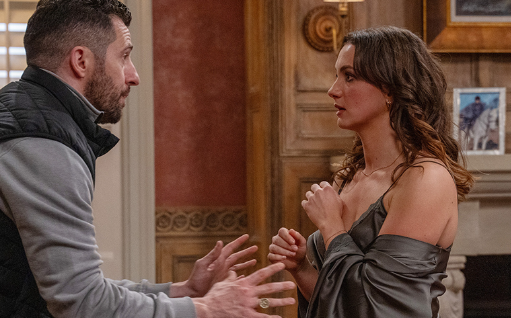 The subsequent pronouncement, “Journey doesn’t need this, you take it,” delivered by the interfering parent, was the ultimate insult. It wasn’t just about the physical objects; it was a judgment, a subtle yet brutal assertion of authority, implying that one partner’s belongings were less valuable, less necessary, than the other’s. It was a demeaning act, designed to undermine the very essence of their partnership and to reinforce the parent’s perceived superior judgment. The raw, visceral reaction, “Like, what the hell? Get,” spoke volumes about the deep-seated frustration and the immediate need to erect a protective barrier against this intrusive force.
This pivotal moment served as a stark reminder that their quest for independence was not a simple matter of physical distance, but a complex battle against deeply ingrained familial patterns and a struggle to define their own identity as a couple. The cameras, which had initially been a means to an end, now bore witness to a raw, unscripted drama, a testament to the immense emotional toll of navigating love amidst external chaos. The impact of these events extends far beyond the confines of their immediate lives, offering a compelling, albeit painful, exploration of the universal challenges faced by young couples striving to forge their own path in a world that often seems determined to dictate their choices. The unraveling of their love story, played out in stark clarity, serves as a potent reminder that the pursuit of happiness is often a perilous journey, demanding immense resilience, unwavering commitment, and the courage to confront even the most deeply entrenched obstacles. Their story, etched in the raw emotion of their shared experience, is a captivating, and often heartbreaking, narrative of love under siege.


